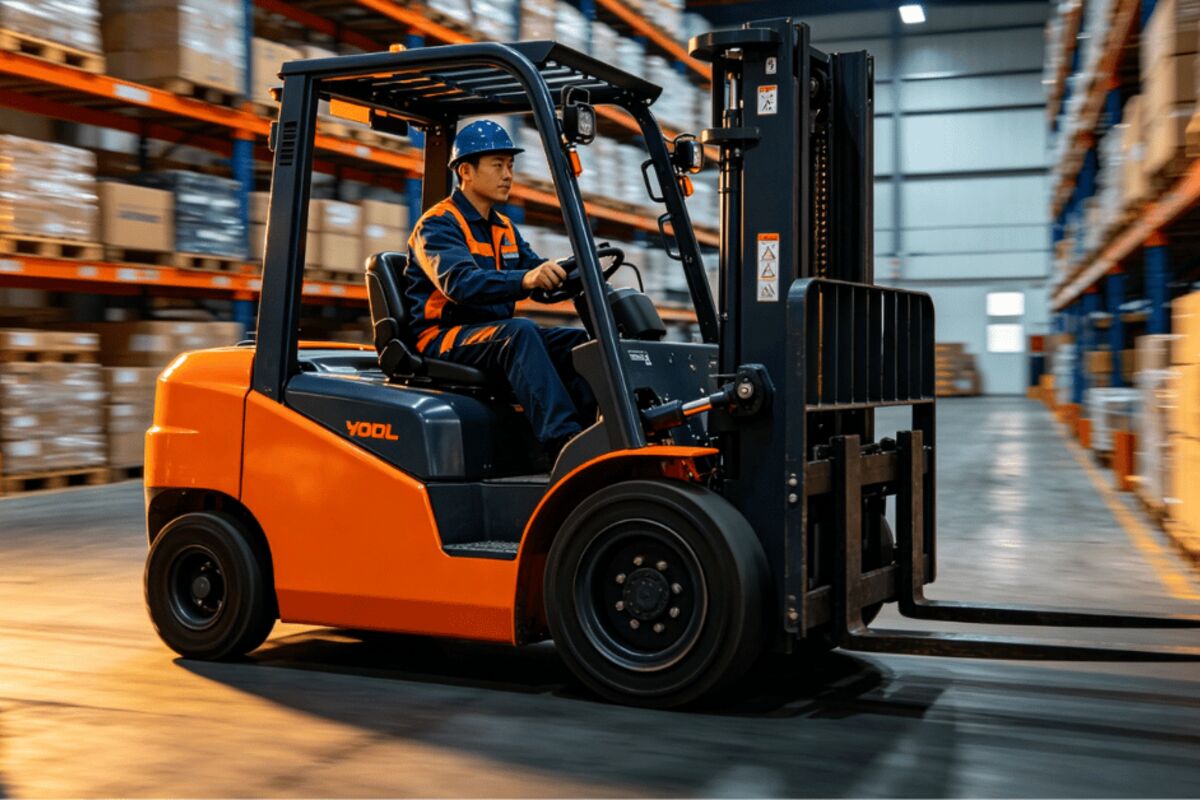
The Vital Role in Modern Logistics Forklift operators are the backbone of global supply chains, essential for the safe and efficient movement of goods. In 2026, their role requires mastering advanced technology and complex systems, with high demand across warehousing, manufacturing, and distribution.
Forklift Operator Guide 2026: Opportunities and Career Growth Explained


By: Kevin Anderson
Your Pathway to Becoming a Forklift Operator This section outlines the practical steps to launch your career, detailing the diverse work environments, essential skills and training, and effective job search strategies.
A. Types of Forklift Jobs and Work Environments Your daily tasks and equipment will vary by industry: * Warehouses & Distribution Centers: The most common setting. You'll use counterbalance forklifts, reach trucks, and order pickersto manage inventory and load trucks in a fast-paced environment requiring high efficiency and spatial awareness. * Manufacturing Plants: You'll transport materials along production lines, often using electric sit-down forkliftsin confined spaces, demanding precision. * Construction Sites: This involves rough-terrain forklifts(telehandlers) to move heavy materials on uneven ground, requiring robust operating skills and strict safety adherence. * Specialized Settings: Includes ports(for container handling), cold storage(freezer operations), and industries handling hazardous materials, which often command higher pay for specialized skills.
B. Essential Skills, Training, and Certification Success hinges on a combination of innate abilities and formal credentials. * Key Skills: Critical abilities include exceptional hand-eye coordination, spatial awareness for tight maneuvers, unwavering attention to detail for safety, and strong problem-solving skills. * Mandatory Certification (OSHA): In the U.S., certification under OSHA Standard 1910.178 is legally required. Valid certification includes three components: 1. Formal Instruction: Classroom learning on fundamentals, stability principles, and regulations. 2. Practical Training: Hands-on operation of the specific truck type. 3. Formal Evaluation: A written test and a performance evaluation. 4. Important: While training schools provide certificates, your employermust officially certify you for their specific equipment. Certification expires every three years or after a safety incident, requiring refresher training.
C. Finding and Securing a Forklift Job The job market is robust. Use these strategies: 1. Targeted Job Search: Use major boards like Indeed and LinkedIn. Major logistics companies (e.g., Amazon, FedEx) list jobs directly on their career sites. 2. Leverage Staffing Agencies: Agencies like Adecco and Randstad specialize in industrial placements and are a common entry point for temp-to-hire roles.
Long-Term Career Growth and Outlook (2026 Perspective) A forklift operator role is a stable career with clear paths for advancement. This section outlines your potential for progression, the importance of continuous learning, and what to expect in terms of compensation and industry demand.
A. Career Advancement Pathways With experience, you can move beyond an operator role into positions with more responsibility and higher pay: * Lead Operator / Trainer: Supervise a team, assist with training new hires, and ensure site safety protocols are followed. * Warehouse Supervisor / Manager: Oversee daily logistics operations, manage inventory, and optimize workflow efficiency. * Logistics Coordinator: Plan and coordinate the movement of goods, working with shipping schedules and inventory systems. * Specialist Roles: Become an expert in operating complex equipment (e.g., narrow-aisle reach trucks) or handling specialized materials, which often commands a premium salary.
B. Continuous Training & Adapting to Technology The industry is evolving. Staying current ensures your skills remain in demand. * Mandatory Recertification: OSHA requires refresher training and evaluation at least every three years. * New Technology Training: Learn to operate and interact with new equipment, such as forklifts with enhanced telematics or assistive automation features. * Software Skills: Develop proficiency with Warehouse Management System (WMS) terminals used for scanning and tracking inventory.
C. Safety, Health, and Compensation Your Safety Responsibility: Safety is paramount. You are responsible for daily pre-shift equipment checks, securing loads properly, and maintaining constant awareness of your surroundings to protect yourself and coworkers. * Health Considerations: The job can be physically demanding. Practicing proper ergonomics and safe lifting techniques is crucial for long-term well-being. * 2026 Job Outlook & Pay: Demand for skilled operators remains strong, driven by e-commerce and logistics. Compensation varies by location, industry, and experience.
Typical 2026 Wage Ranges (U.S. Estimate): * Entry-Level (0-2 yrs): $16 - $20/hour * Experienced (3-5 yrs): $20 - $25/hour * Senior/Specialist (5+ yrs): $25 - $30+/hour Overtime opportunities and higher pay are common in specialized sectors like cold storage or ports.
Conclusion and Your Next Steps A career as a forklift operator in 2026 offers more than a job—it provides a stable, essential, and respected role at the heart of the global economy. This guide has outlined the vital importance of the position, the clear pathway to entry through certification and training, and the tangible opportunities for long-term growth and specialization.
Key Takeaways for Your Success: You Are Essential: Your skills keep supply chains moving. The demand for proficient operators is secure and growing. * Certification is Your Foundation: Earning and maintaining your OSHA-compliant certification is the non-negotiable first step to a safe and legitimate career. * Growth is a Choice: This field offers clear advancement. By committing to continuous learning, embracing new technologies, and prioritizing safety, you can build a rewarding career with increasing responsibility and compensation.
Your Action Plan Starts Now: 1. Get Certified: Research and enroll in an accredited forklift training program. 2. Prepare Your Resume: Highlight your certification, mechanical aptitude, and unwavering commitment to safety. 3. Begin Your Search: Utilize job boards and staffing agencies that specialize in industrial roles to find your first position.
The infrastructure of modern commerce relies on skilled professionals like you. By taking these steps, you are not just finding a job—you are building a foundational career with lasting value. The opportunity to secure your future in this critical field is ready.