
A New Kind of Work Partner
Artificial intelligence is no longer a futuristic concept reserved for tech giants. It has become a practical, everyday tool that helps professionals across industries accomplish more with less effort and greater accuracy.


By: Sarah Johnson
 10 Minute read
Artificial intelligence is no longer a futuristic concept reserved for tech giants. It has become a practical, everyday tool that helps professionals across industries accomplish more with less effort and greater accuracy.
At its core, artificial intelligence refers to software systems that can learn from data, recognize patterns, and make decisions or generate outputs that previously required human judgment. Rather than following rigid, pre-programmed instructions, modern AI models adapt and improve as they process more information.
The current wave of AI tools most people encounter falls under generative AI and machine learning. These systems power everything from writing assistants and image generators to diagnostic tools and financial forecasting models. They do not think the way humans do, but they excel at processing enormous volumes of information quickly and surfacing insights that would take a person hours or days to find.
Conventional software executes fixed rules. A spreadsheet formula always returns the same result given the same inputs. AI, by contrast, works with probabilities and context. A language model can draft a contract summary, adjust its tone for different audiences, and flag clauses that seem unusual compared to thousands of similar documents it has analyzed. This flexibility is what makes AI feel less like a tool and more like a capable assistant.
Natural language interfaces have made this technology accessible to non-technical users. Instead of learning specialized commands or code, professionals simply describe what they need in plain language. This shift has lowered the barrier to entry dramatically, putting powerful capabilities in the hands of marketers, lawyers, educators, and small business owners alike.
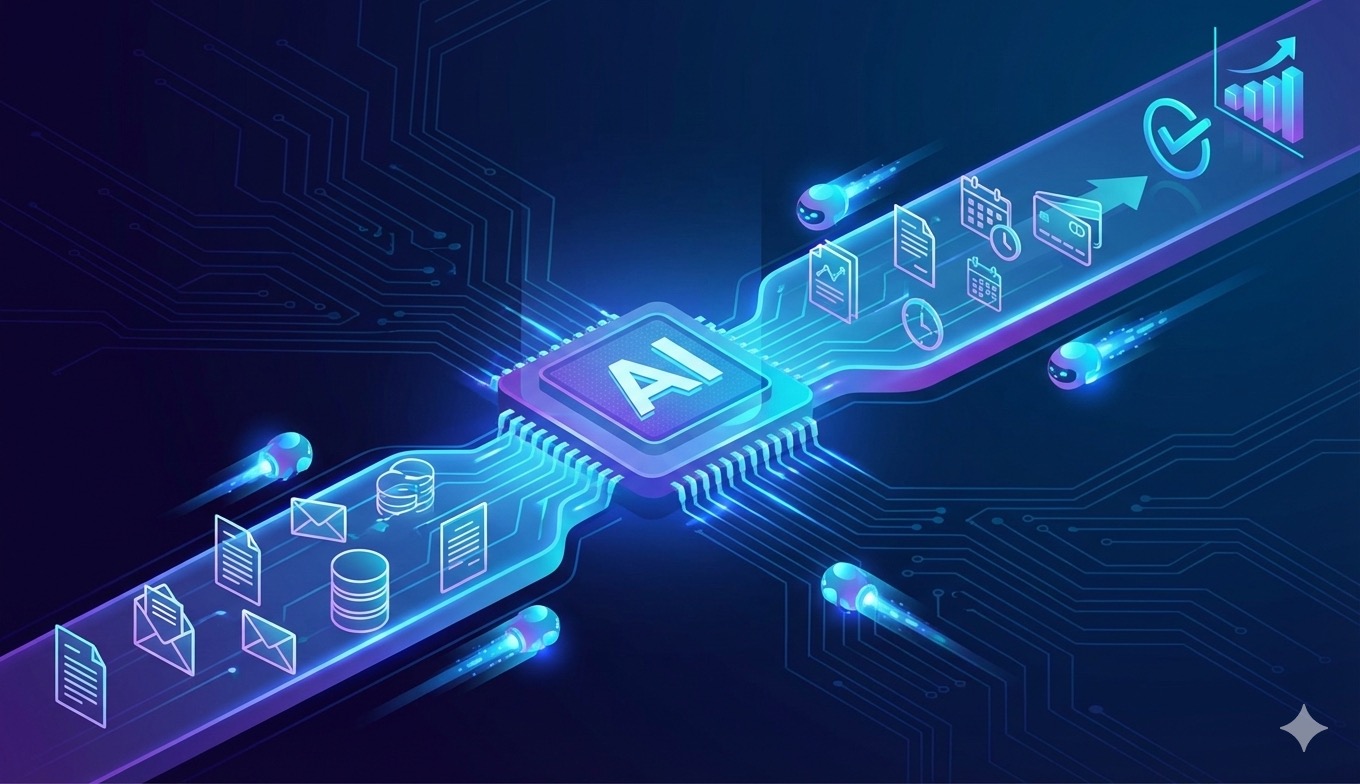
The real value of AI becomes clear when it is applied to the tasks that consume disproportionate amounts of time relative to the judgment they require. It handles the repetitive groundwork so professionals can focus on strategy, creativity, and relationships.
AI thrives at tasks that are necessary but mentally draining. Summarizing long documents, sorting through emails, transcribing meetings, cleaning messy data, and generating first drafts of reports are all areas where AI can cut hours of work down to minutes. This does not replace the professional's expertise but frees them to apply it where it matters most.
What once required a team of analysts combing through databases can now be handled by AI systems that scan, cross-reference, and synthesize information in seconds. Market researchers can identify emerging trends faster. Legal professionals can review case law more thoroughly. Healthcare workers can access relevant medical literature during a patient consultation rather than after it.
AI does not make decisions for people, but it gives them better information to decide with. Predictive models can forecast demand, flag supply chain risks, or identify which customers are most likely to churn. The human still weighs the options and makes the call, but with a far more complete picture than gut instinct alone provides.
From drafting marketing copy and brainstorming product names to generating visual concepts and translating content across languages, AI has become a genuine creative collaborator. It produces starting points and variations quickly, letting professionals iterate and refine rather than staring at a blank page.
Adopting AI at work does not require a computer science degree or a massive budget. However, approaching it thoughtfully makes a significant difference in the results you get.
The most effective way to introduce AI is to identify the tasks that slow you down the most. Look for anything repetitive, data-heavy, or time-consuming relative to its complexity. These are the areas where AI delivers the fastest and most noticeable return.
AI outputs are impressive but imperfect. Language models can produce confident-sounding text that contains errors. Analytical tools can surface correlations that do not hold up under scrutiny. Treating AI as a first draft generator or research assistant rather than a final authority ensures quality stays high. The most productive workflows pair AI speed with human judgment.
Before uploading sensitive business data or client information into any AI platform, understand where that data goes and how it is stored. Many enterprise AI tools now offer private, secure environments designed for professional use. Choosing the right platform matters as much as choosing the right tool.
Will AI replace my job? For most roles, AI is reshaping job descriptions rather than eliminating positions. Professionals who learn to work alongside AI become more productive and more valuable, not less. The greater risk lies in ignoring the technology while competitors adopt it.
Do I need technical skills to use AI? Most modern AI tools are designed for non-technical users. If you can write a clear email, you can prompt an AI assistant effectively. Learning to give precise instructions improves results, but no coding is required.
How do I know which AI tool is right for me? Start with a specific problem you want to solve rather than shopping for features. Many tools offer free tiers that let you test their capabilities before committing. Match the tool to the task, not the other way around.